


2 Beginner workout programs to get stronger
Getting stronger in the gym sounds simple: lift progressively heavier weights over time.
Knowing how to structure your training so that you actually get stronger is where things get a little more complicated.
The good news is you don't have to figure it out yourself. There are plenty of tried-and-tested strength programs that take the guesswork out of your training.
In this article, we'll look at 2 proven strength training programs for beginners and how they work.

Beginner program 1: Starting strength
Start here if you've never seen a barbell before. This plan has 3 phases, each with variable lengths.
This program has 2 major benefits:
It's very simple, there are just two workouts to do with few exercises
It captures "beginner's gains". When you start working out, you will be able to lift heavier weights weekly. Starting strength program takes advantage of this.
Before even thinking about lifting weights you consider heavy, your technique must be good. Your technique will evolve with you as you progress in the gym, but basic proper form is required before lifting heavy.
Before any of my clients lift heavy weights, we focus on:
Bracing properly: knowing how to tighten up the core to create a rigid torso and using breathing mechanics to create more tension
Working through the whole range of motion
Starting strength phase 1
Workout 1
Squat 3 set of 5 reps
Bench press 3 sets of 5 reps
Deadlift 1 set of 5 reps
Workout 2
Squat 3 set of 5 reps
Overhead barbell press 3 sets of 5 reps
Deadlift 1 set of 5 reps

Boom, pretty simple right? Few notes about these workouts.
These are working sets. Warm up sets are not included.
These are the main lifts. You can do auxiliary exercises like arms, abs, or any other stuff that floats your boat, but the main focus is on those 3 moves each workout
Yes, it is only one working set of the deadlift
What are good auxiliary exercises?
An auxiliary exercise helps you get better on your main lifts. It often targets similar muscles in different ways.
Chest auxiliary exercises:
Incline bench press
Dips
Chest flys
Shoulder press
Back auxiliary exercises:
Pull ups
Lat pull down
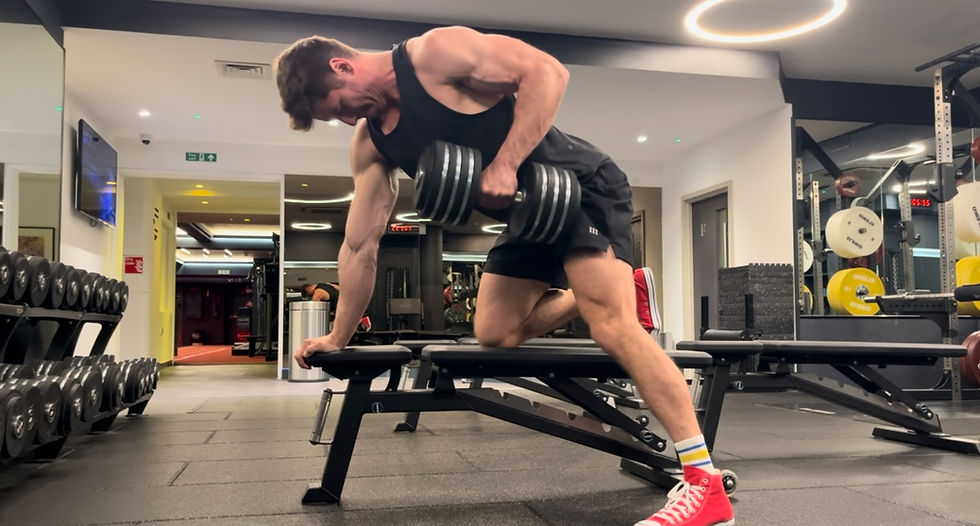
Bent over rows
Seated rows
Leg auxiliary exercises
Split squat
Leg press
RDL
Stick to 1-2 auxiliary exercises per main lift depending on time. If you want to add target arm and core work, keep those to 1-2 exercises as well.

Scheduling the workouts
You'll do the workout 3 times a week, alternating between the two workouts.
Week 1: workout 1, workout 2, workout 1
Week 2: workout 2, workout 1, workout 2
Phase 1 typically lasts 3 weeks
Progressing the workouts
You should be able to lift heavier weights on a weekly basis. Add weight as needed to make the sets feel hard but manageable. If your form deteriorates or you can't complete the reps, you've gone too far.
Starting strength phase 2
Workout 1
Squat 3 set of 5 reps
Bench press 3 sets of 5 reps
Deadlift 1 set of 5 reps
Workout 2
Squat 3 set of 5 reps
Overhead barbell press 3 sets of 5 reps
Power clean 3 sets of 5 reps
The only difference here is the addition of the power clean. This will allow you to recover from your deadlift days while still working on the same muscles.
Everything stays the same on the scheduling and progression front.
This phase can last up to a few months depending on the trainee.
Starting strength phase 3
Workout 1
Squat 3 set of 5 reps
Bench press or over head press 3 sets of 5 reps
Deadlift 1 set of 5 reps or power clean 3 sets of 5 reps
Workout 2
Squat 3 set of 5 reps
Bench press or over head press 3 sets of 5 reps
Chin ups
At this stage, you need to give your pulling muscles more recovery. That's why you alternate between the deadlifts and cleans on Workout 1 and do chin ups on Workout 2.
Example:
Monday, workout 1: deadlifts
Wednesday, workout 2: chin ups
Friday, workout 3: power cleans
The length of this phase is also variable. It should end when you hit a plateau, meaning you haven't been able to increase the weights on any of the exercises for two consecutive weeks. This will happen anywhere between 3 and 6 months of proper, consistent training.
Once that happens, you can move on to another program outlined below.

Beginner program 2: Texas method
The Texas method is a natural progression from Starting Strength because it uses a very similar structure.
The program follows a volume - recovery - strength day pattern (hello DUP). Bench press and overhead press are alternated from workout to workout like the Starting Strength program.
Day 1: Volume day
Squat 5 sets of 5 reps with 90% of the strength day's weight
Bench press or overhead press 5 sets of 5 reps with 90% of strength day's weight
Deadlifts 1 set of 5 reps
Day 2: recovery day
Squats 2 sets of 5 reps with 80% of day 1's weight
Bench or overhead press 3 sets of 5 with slightly lighter weight than day 1.
Chin ups: 3 sets to failure
Day 3: Strength day
Squats 1 set of 5 reps for a PR attempt
Bench or overhead press 1 set of 5 for a PR attempt
Power clean 5 sets of 3
The idea behind this program is to stress the body on day 1, let it recover on day 2 and reap the benefits on day 3.
Scheduling the workouts
In an ideal world, these workouts are to be done on Monday, Wednesday and Friday, allowing for two days of recovery on the weekend.
Making sure to have at least one recovery day between each workout is the most important part.

Progressing the workouts
Every Friday (or strength day) is a PR attempt. In a perfect world, those numbers go up every week or every other week. These numbers dictate which weights you use the following week.
Example:
Volume day 1: 5 sets of 5 squats at 100kg
Recovery day 1: 2 sets of 5 squats at 80kg
Strength day 1: 1 set of 5 squats at 120kg (PR)
Volume day 2: 5 sets of 5 squats at 108kg (90% of strength day)
Recovery day 2: 2 sets of 5 squats at 86kg (80% of volume day)
Strength day 2: PR attempt and repeat the cycle
The deadlifts are attempted once a week, on the volume day. For that reason, each week the goal is to lift a little more.
The Texas Method is a great intermediate strength program for people who have stalled using beginner programs.
Stick with this one as long as you plateau again, usually another 4-6 months before trying a new one.
Conclusion
Going through a full cycle of Starting Strength and the Texas Method should take you at least a full year. Both programs are great for beginners and will help you get stronger consistently in your first couple years of lifting.
Once you've completed your first cycle of the Texas Method, it'll be time to move onto intermediate workout programs such as the Candito, 5 x 5 or the many others out there.
Happy training!
Clem



Comments