


How to Brace Your Core When Lifting Weights
Learning how to brace properly is one of the most useful skills to develop in the gym.
A good brace helps to create a stable trunk, maintain position under load and transfer force more effectively. That becomes particularly important when squatting, deadlifting or lifting heavy weights.
If the term "brace your core/abs" confuses you, this article will help!
Let's get right into it.
What is bracing your core?
Bracing means creating tension through the muscles around your trunk to help stabilise your spine while you lift.
It's most obvious during exercises like squats and deadlifts, but you'll use some degree of bracing during almost any exercise where you need to keep your torso stable.
Bracing is NOT simply holding your breath.
Bracing is absolutely NOT sucking your stomach in. That is literally the anti brace.
You're creating tension through your trunk while using your breathing to increase pressure inside your torso.
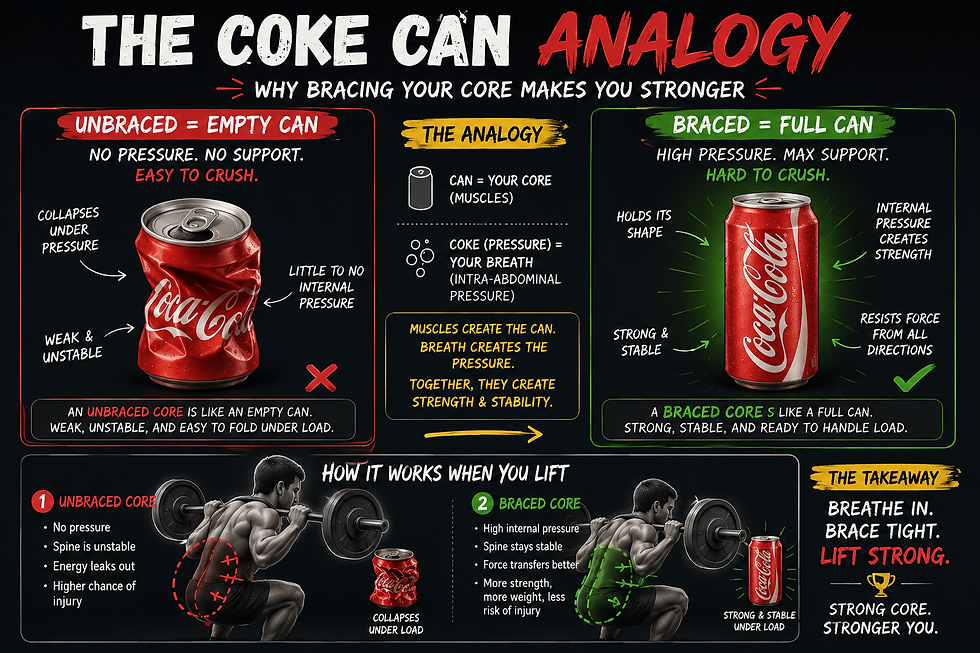
The Coke can analogy
Think about an unopened can of Coca-Cola.
It's surprisingly difficult to crush because the pressure inside the can helps it maintain its shape.
Now take an empty can: much easier to crush.
Your torso works in a somewhat similar way.
Your muscles create the structure. Your breath helps create pressure inside that structure.
Put the two together and you have a much more stable trunk.
What muscles brace the core?
There's no single “bracing muscle.”
Your trunk works as a system. The main muscles involved are:
Obliques
Diaphragm
Spinal erectors
Rectus abdominis (six-pack muscle)
Transverse abdominis
Quadratus lumborum (QL)
At the end of the day, any muscles that keep your core stable during an exercise will be engaged. Sometimes lats and pecs will also help your bracing effort.
How to brace your core
There are two components of a strong brace:
Engaging the muscles mentioned above
Using your breath to create more pressure in your trunk. Remember the can of Coke. Engaging your core muscles represents the actual can. Creating pressure in your trunk using your breath is like filling the can with actual Coke.
How to engage your core muscles
A good brace comes from all muscles of the core working together. The key to achieve this is by learning how to engage the obliques. Strong, engaged obliques will make it easier to contract the other muscles.
Engaging your obliques takes practice. Here is a good place to start:
Find your hip crest with your fingers
Go up one inch
Push your fingers gently towards your spine. You are currently pushing against your oblique muscles
Try to push out your fingers by contracting your obliques
Yes, if you've never done this before, it will feel odd. Practice makes perfect.
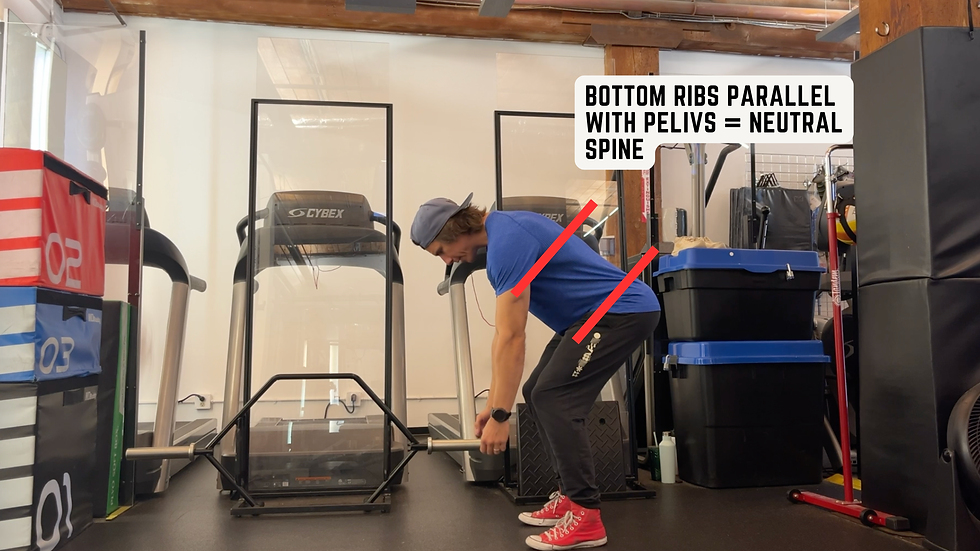
A common mistake I see if overly relying on the six pack muscle. Although they are part of a solid brace, if we ONLY contract them, and the other muscles, it can lead to a rounded spine like the picture below.
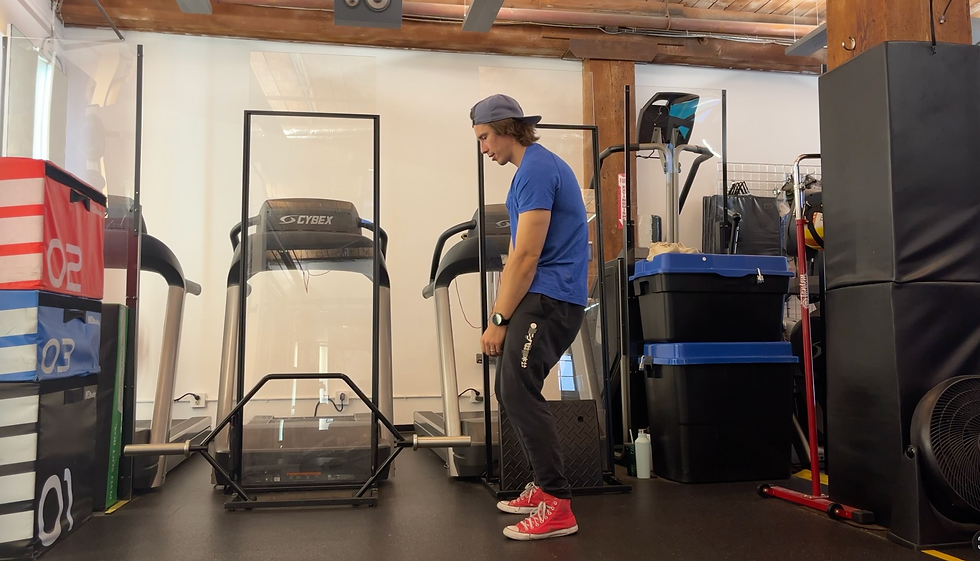
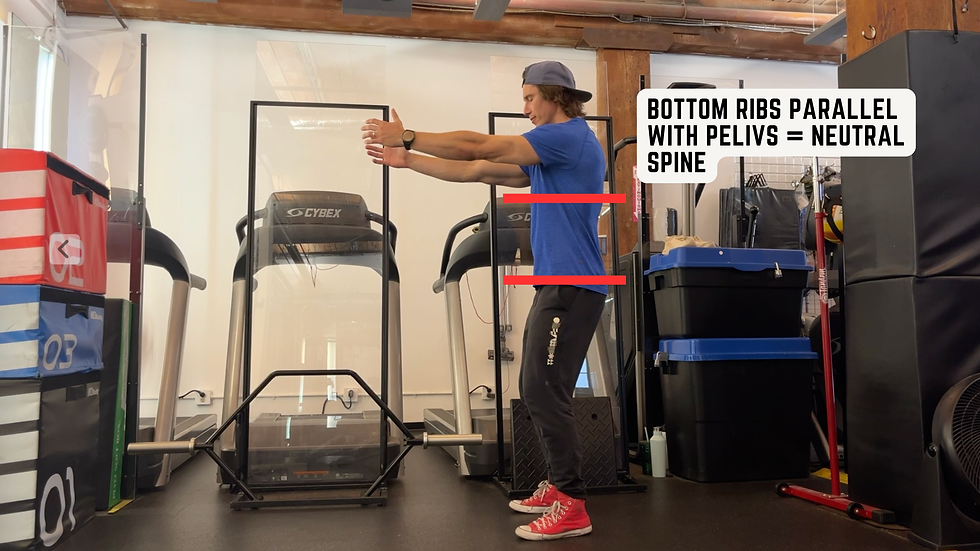
The goal is to brace the core and maintain a neutral spine
How to use your breath
Now we get to the second part of the brace.
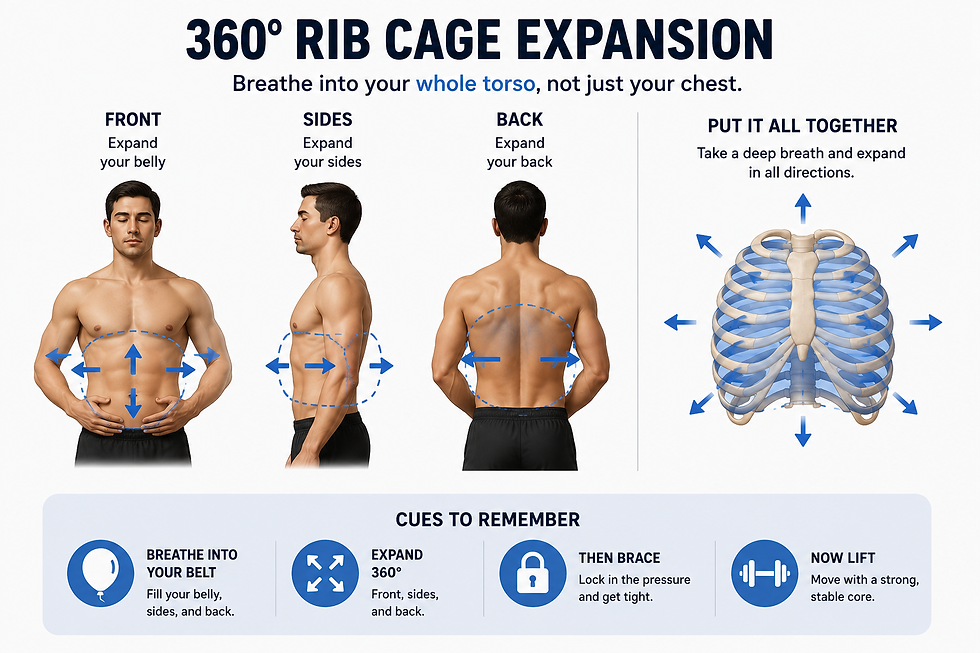
Take a deep breath and imagine you're trying to expand your rib cage in every direction.
Rather than simply lifting your chest, think about expanding:
Your stomach
Your sides
Your lower ribs
Your back
A useful cue is to imagine you're trying to breathe into your belt.
Once you've taken that breath, hold it briefly while maintaining tension through your trunk.
This increases intra-abdominal and intrathoracic pressure, which contributes to trunk stiffness during heavy lifting.
Breathing pattern in the gym
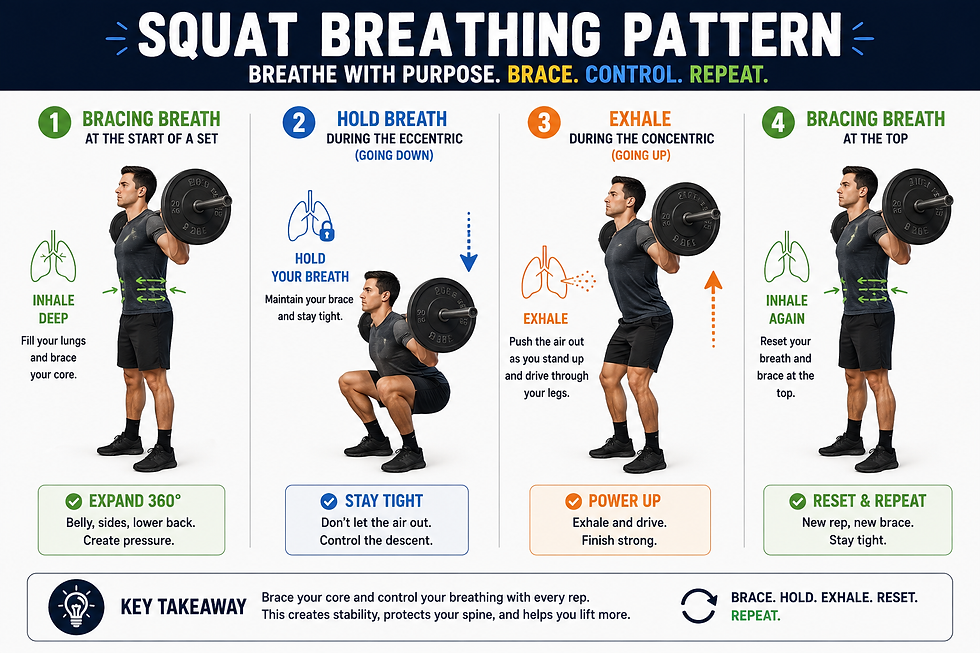
For heavy compound lifts, one common approach is to inhale and brace before the repetition, maintain that brace during the descent, and exhale as you drive through the hardest part of the lift or once you pass it. Reset your breath and brace before the next repetition as needed.
For lighter exercises, you can generally breathe more freely.
Can you hold your breath through multiple reps?
Short answer: yes, as long as you don't pass out or don't have high blood pressure or other medical condition that would prevent you from doing so.
This is where personal preferences come into play. Some people like to do 2 reps before inhaling again. Some people like to do 5 reps in a row. Some people inhale every rep.
What's important is to find a rhythm that works for you.
3 Exercises to practice bracing
I give out these three exercises to all my clients who need to learn how to brace.
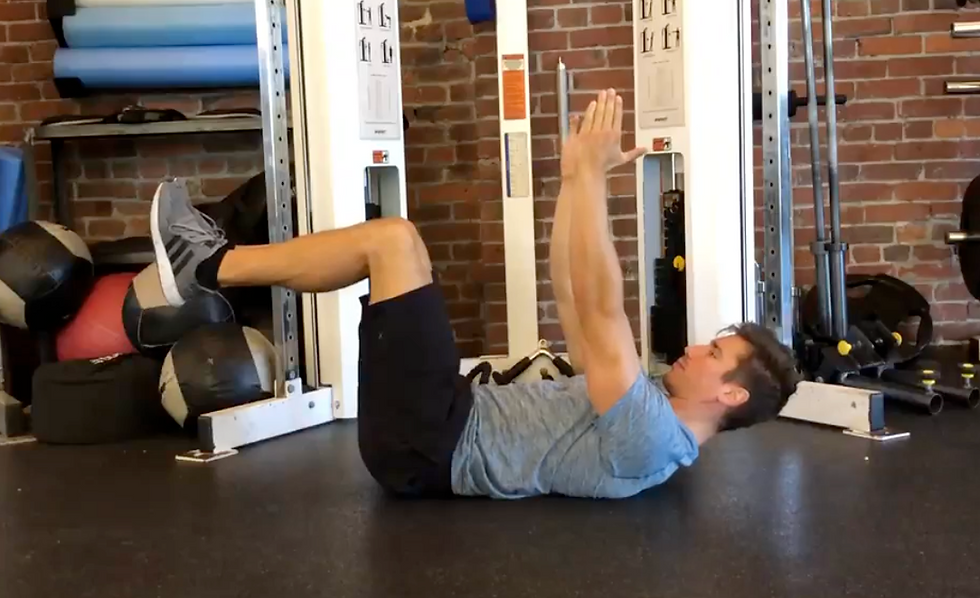
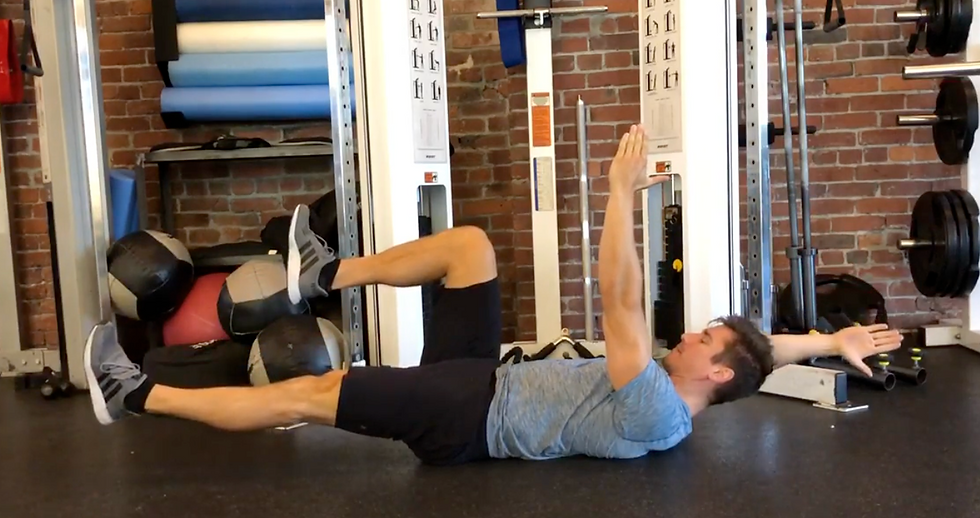
Core exercise 1: deadbugs
Keep your lower back gently in contact with the floor and avoid excessive arching as you extend your arm and leg.
Use a range of motion you can control.
Do not let the ribs flare out as the arm and leg reach down.
3 sets of 6-10 reps on each arm, alternating each time.
Core exercise 2: side plank breathing
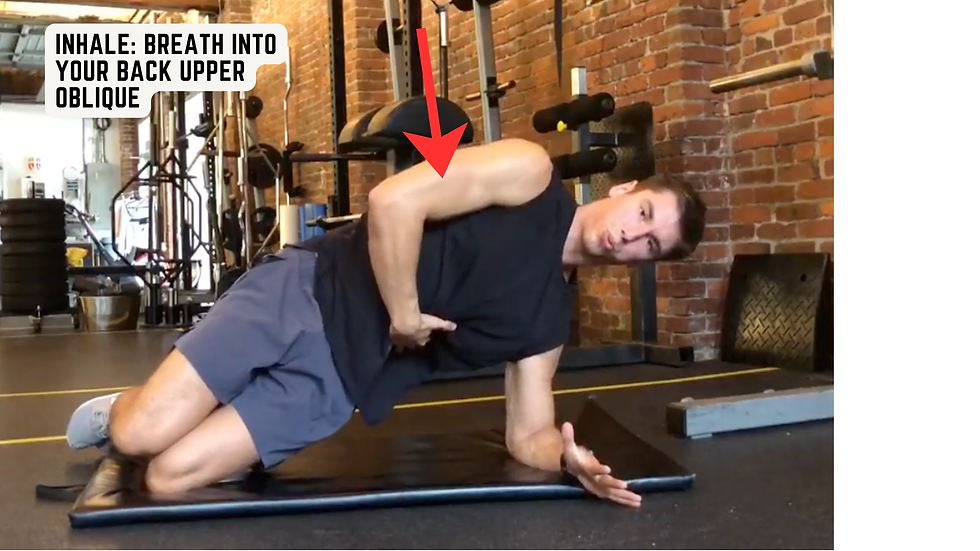
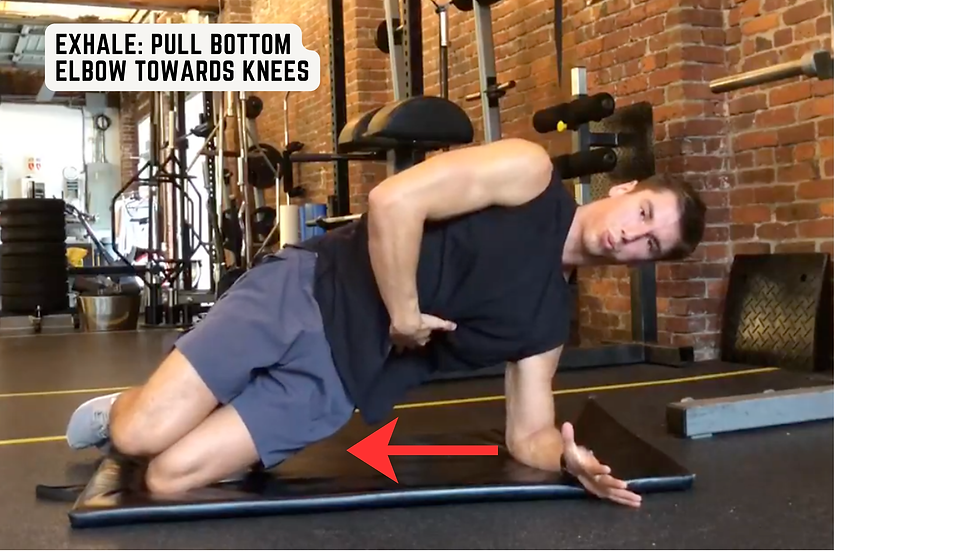
This one focuses more on the breathing portion.
Inhale and expand your back and upper oblique.
Exhale and pull your lower elbow towards the knees. This will engage the lower oblique.
The longer you exhale, the more the bottom oblique will work.
3 sets of 5 breaths on each side, exhaling for at least 5 seconds
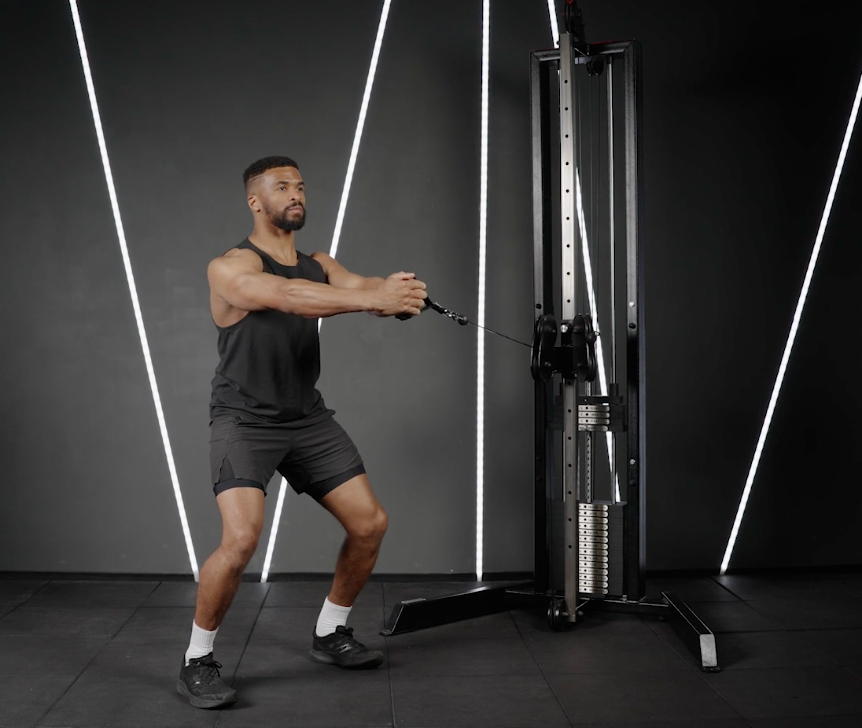
Core exercise 3: cable Pallof Press
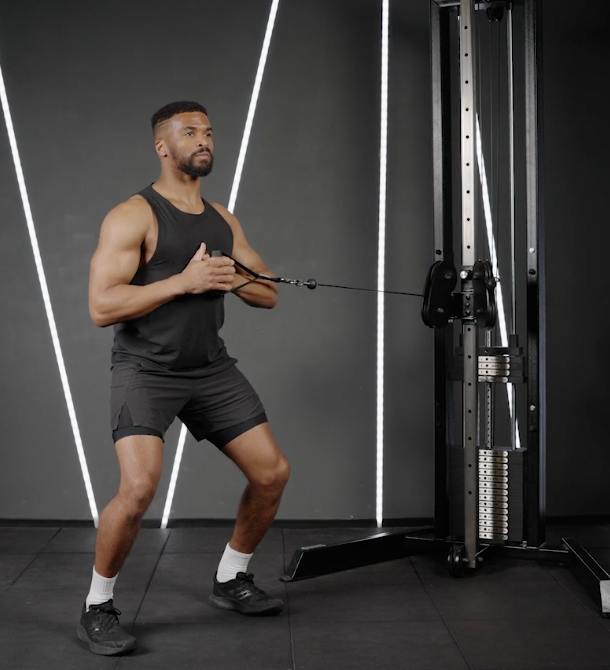
This is a staple for all of my clients, regardless of fitness level.
Keep the knees slightly bent
Reach as far forward with the hands
Always keep hands aligned with the center of the chest
Pause for one second at full extension before returning
Move slowly when reaching forward and back
3 sets of 10 reps each side
The following two pictures are from the Trainerize Video Library, I do not own any rights to them.
Conclusion
Bracing takes practice.
Learn how to create tension around your trunk, use your breath to increase pressure and maintain that stability while you lift.
Start with lighter weights and practice the skill.
Then gradually apply it to heavier squats, deadlifts, bench presses and other compound movements.
A stronger brace won't magically make you stronger overnight, but learning how to use your body properly will give you a much better foundation for getting stronger over time.
Happy training,
Clem


Comments