


How to do your first chin up: a beginner's guide
This guide will help you get your first unassisted bodyweight pull-up. You'll learn proper technique, which muscles you use, how different grips compare, and which exercises to practise as you work towards your first rep.
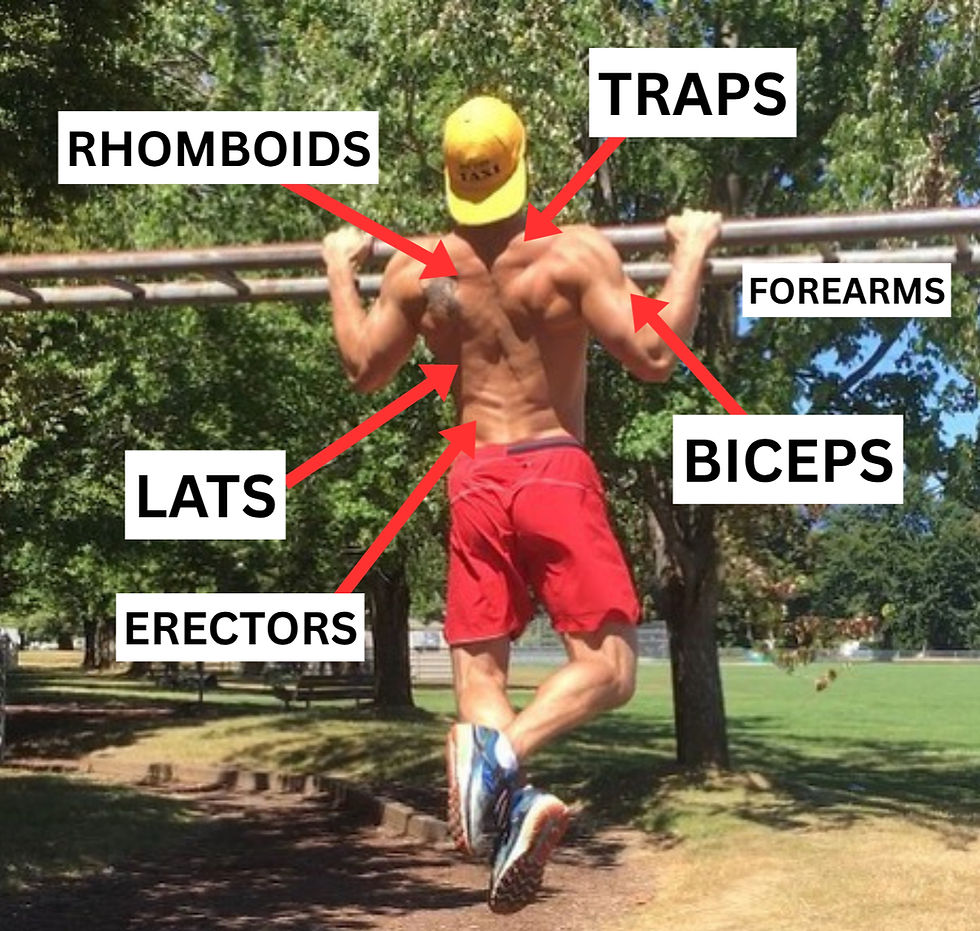
What muscles do pull-ups work
Pull ups primarily work two large muscles:
The lats
The biceps
They also work, to a lesser extent, the following muscles:
The rhomboids
The rear delts
The brachialis
The forearms muscles
The erector spinae muscles
Pull ups technique for beginners
There are 3 main points I teach to all my clients, regardless of which grip they use:
Keep ears away from shoulders. This prevents excessive shrugging which makes it tough to engage the right muscles.
Pull with the elbows. Pretend like your hands and forearms are hooks, and you are pulling your elbows down towards the ground.
Chest to the bar. You don't have to touch the bar with your chest, just make sure your chest is pointing towards the bar at the end of each rep. This prevents the shoulders from collapsing inward at the top.
All these cues are valid for all exercise progression.
What is the best grip for pull ups?
There are three common ways to grip a pull-up bar:
Overhand grip (pull-up): Your palms face away from you.
Underhand grip (chin-up): Your palms face towards you.
Neutral grip: Your palms face each other.

All three variations train your back and elbow flexors, but the grip changes how the movement feels and how different muscles contribute.
Chin-ups often allow greater biceps involvement, while a neutral grip can feel more comfortable on the wrists and shoulders for some people. The overhand pull-up usually feel more challenging for beginners, but this isn't true for everyone.
If your goal is your first pull-up, start with the grip that feels most comfortable and allows you to practise with good control. You can build towards other grips as your strength improves.
I have personally found that most people will find the neutral grip the easiest.
Workout plan to get your first pull up
This is the exercise progression I use to help clients get their first pull up.
Keep in mind the common cues for all the following exercises:
Keep ears away from shoulders
Pull with the elbows
Chest to the bar
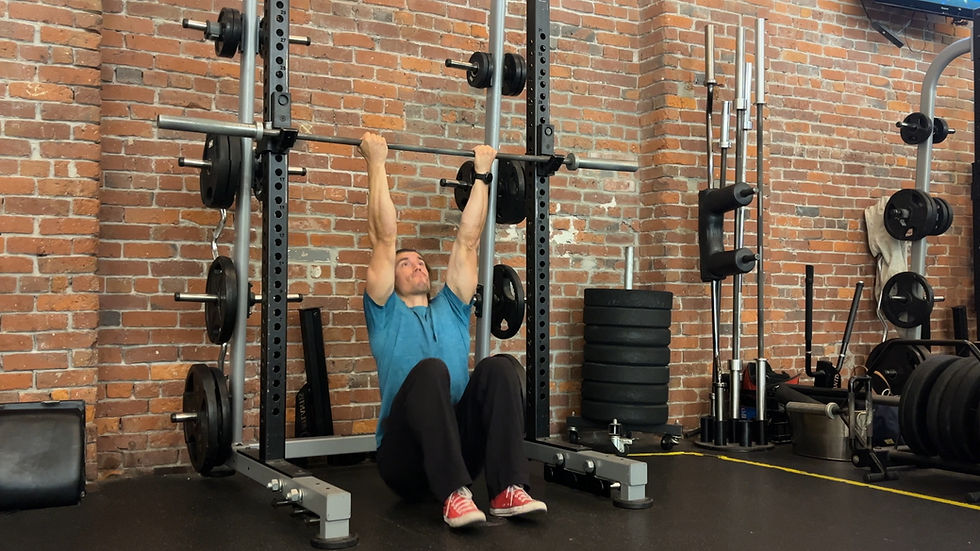
Exercise 1: feet assisted chin ups
Use your legs to assist just enough to complete each rep with control. Gradually reduce the help from your feet as you get stronger.
Keep hip underneath the shoulders as much as possible
Goal: 3 sets of 10

Exercise 2: feet assisted chin ups with isometric hold
Same as above, but now, lift the feet off the ground for 2 seconds at the top of each rep
Goal: 3 sets of 8 reps
Start with 1 second holds for less reps and work towards two second hold for 8 reps.

A progression for this exercise could be:
Week 1: 3 sets of 4 reps with 1 sec hold
Week 2: 3 sets of 6 reps with 1 sec hold
Week 3: 3 sets of 8 reps with 1 sec hold
Week 4: 3 sets of 4 reps with 2 sec hold
Week 5: 3 sets of 6 reps with 2 sec hold
Week 6: 3 sets of 8 reps with 2 sec hold
Exercise 3: Band assisted chin up
Loop a band around one or both feet
This is a great exercise to really get a feel for what body weight pull ups are
Be careful when securing and stepping into a resistance band, as it can slip or snap back.
Goal: 3 sets of 6 reps with a light band. Start with a heavy band and work your way towards the lighter one
Exercise 4: Eccentric pull ups
"Jump" up the the top of the bar. Use a high box so you don't actually have much jumping to do
Take 5 seconds to come down
Lower yourself under control, resisting gravity while keeping your shoulders and torso stable.
Goal: 3 sets of 5
A progression for this exercise could be
Week 1: 3 x 3 reps with 2 sec eccentric
Week 2: 3 x 3 reps with 4 sec eccentric
Week 3: 3 x 5 reps with 2 sec eccentric
Week 4: 3 x 2 reps with 5 sec eccentric
Week 5: 3 x 5 reps with 5 sec eccentric

Once you can control several slow eccentric reps, start testing occasional unassisted reps while fresh. Continue practising band-assisted and eccentric pull-ups to build
strength.
You don't need to wait until you hit a specific number before trying your first rep.
Practise 2–3 times per week, allowing recovery between sessions.
Stop each set before your technique deteriorates.
Progress by reducing assistance, improving control or adding reps, not all three at once.
Keep the rest of your training balanced, including rows and other pulling exercises.

These are general starting points, not mandatory rules. Beginners who experience persistent elbow or shoulder pain should modify the exercise and seek appropriate guidance.
Your First Pull-Up Is Within Reach
Getting your first pull-up takes time, but you don't need to be able to lift your entire bodyweight from day one.
Start with the grip that feels most comfortable, practise your technique and build strength with assisted and eccentric pull-ups. As you get stronger, gradually reduce the assistance and start testing unassisted reps.
Be patient, stay consistent and focus on progress rather than perfection. Your first pull-up might take a few weeks or several months, depending on your starting strength and training history.
And once you get that first rep? You've got a new goal: getting your second.
Happy training!
Clem



Comments